admin
admin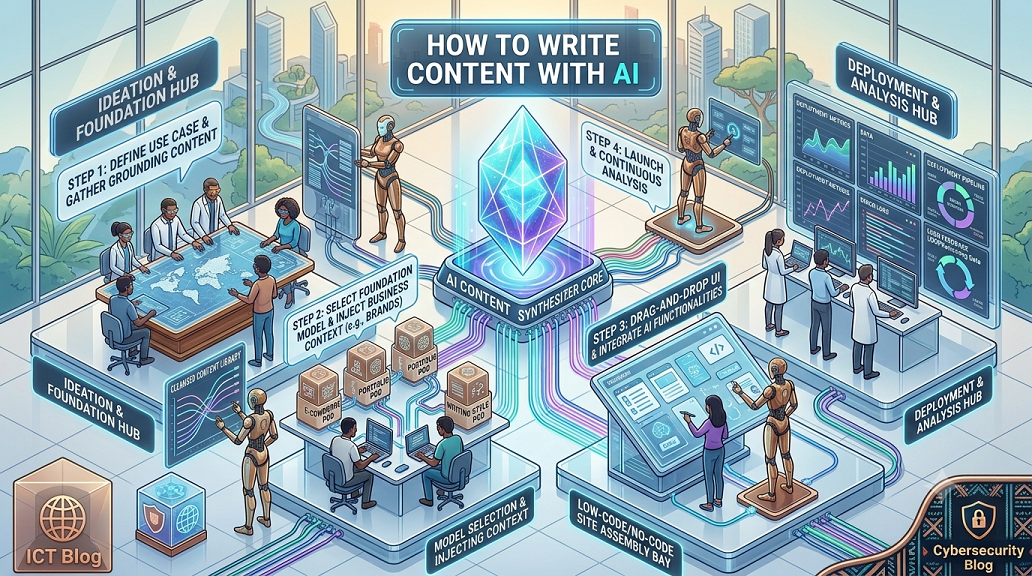
How to Write High-Quality Content with AI for Websites, Blogs, Emails, and Social Media
Artificial Intelligence has transformed content creation for developers, bloggers, digital marketers, social media managers, startups, agencies, e-commerce businesses, and organizations of all sizes. AI tools can significantly reduce content creation time while improving consistency, SEO performance, personalization, and audience engagement.
However, the difference between average AI-generated content and high-performing content lies in how AI is used. AI should be treated as a powerful assistant for research, ideation, optimization, and drafting—not as a replacement for human expertise, creativity, and strategic thinking.
Why Businesses Are Using AI for Content Creation
Modern businesses use AI content tools to:
- Generate website content faster
- Write SEO-optimized blog posts
- Create email campaigns and newsletters
- Produce engaging social media content
- Improve content personalization
- Translate content into multiple languages
- Generate product descriptions
- Create ad copy and landing pages
- Repurpose content across multiple channels
- Analyze content performance
Step 1: Define Your Goal Before Using AI
Before opening any AI tool, identify:
Website Content
- Are you writing homepage content?
- Service pages?
- Product pages?
- Landing pages?
- FAQs?
Blog Content
- Educational articles
- Industry news
- Tutorials
- Comparison articles
- Case studies
Email Content
- Newsletters
- Welcome sequences
- Promotional campaigns
- Customer onboarding emails
- Follow-up emails
Social Media Content
- Brand awareness posts
- Engagement posts
- Lead generation campaigns
- Educational carousels
- Video scripts
The better your objective, the better the AI output.
Step 2: Give AI Detailed Instructions
Poor prompt:
Write an article about cybersecurity.
Better prompt:
Write a 2,000-word SEO blog post for Nigerian SMEs explaining how AI-powered cyber attacks work, including phishing, ransomware, deepfakes, prevention methods, practical examples, FAQs, and actionable cybersecurity recommendations.
Excellent prompts contain:
- Audience
- Tone
- Length
- Keywords
- Structure
- Examples
- Call-to-action
- Industry context
Step 3: Use AI for Research First
Professional content creators use AI to gather:
- Statistics
- Industry trends
- Competitor analysis
- User questions
- Keyword opportunities
- Search intent
Helpful research tools include:
Step 4: Add Human Expertise
AI-generated content becomes valuable when combined with:
- Personal experience
- Industry expertise
- Case studies
- Customer stories
- Local market understanding
- Original research
Google increasingly rewards Experience, Expertise, Authoritativeness, and Trustworthiness (E-E-A-T).
Step 5: Optimize for SEO
High-quality AI content should include:
For Websites
- Optimized page titles
- Meta descriptions
- Proper heading structure
- Internal linking
- Schema markup
- Fast loading pages
For Blogs
- Primary keywords
- Semantic keywords
- Featured snippet optimization
- FAQ sections
- External authority links
For Emails
- Personalized subject lines
- Segmentation
- Strong CTA placement
For Social Media
- Platform-specific formatting
- Hashtags
- Engagement triggers
- Visual content integration
Useful SEO resources:
Step 6: Edit and Fact Check Everything
AI sometimes produces:
- Outdated information
- Incorrect statistics
- Fabricated references
- Weak examples
- Repetitive language
Always verify:
- Facts
- Statistics
- Dates
- Legal information
- Medical information
- Financial advice
Best AI Tools for Website Content Writing
1. ChatGPT by OpenAI
Best for:
- Homepage content
- Service pages
- FAQs
- Landing pages
- Website copywriting
Strength:
- Excellent contextual understanding.
2. Claude by Anthropic
Best for:
- Long-form website content
- Technical pages
- Documentation
Strength:
- Strong reasoning and long context handling.
3. Jasper AI
Best for:
- Conversion-focused website copy
- Sales pages
Strength:
- Marketing templates.
4. Copy.ai
Best for:
- Product descriptions
- Landing pages
Strength:
- Fast content generation.
5. Writesonic
Best for:
- SEO website pages
- Service descriptions
Strength:
- SEO integrations.
Best AI Tools for Blog Writing
1. ChatGPT by OpenAI
Best for:
- Educational articles
- Tutorials
- Technical guides
2. Jasper AI
Best for:
- Marketing blogs
- Brand content
3. Writesonic
Best for:
- SEO articles
4. Surfer SEO
Best for:
- Content optimization
- Keyword density analysis
5. Frase
Best for:
- Content briefs
- SERP analysis
- Competitor research
Best AI Tools for Email Writing
1. HubSpot AI Email Writer
Best for:
- Marketing campaigns
- Sales emails
2. Mailchimp AI Tools
Best for:
- Newsletter generation
- Campaign optimization
3. Jasper AI
Best for:
- Promotional emails
- Sales funnels
4. Copy.ai
Best for:
- Cold outreach campaigns
5. Lavender AI
Best for:
- Sales prospecting emails
Best AI Tools for Social Media Content
1. Buffer AI Assistant
Best for:
- Social post generation
2. Hootsuite OwlyWriter AI
Best for:
- Multi-platform social campaigns
3. Canva Magic Write
Best for:
- Captions and visual content workflows
4. Predis.ai
Best for:
- AI-generated creatives and captions
5. Lately AI
Best for:
- Repurposing blogs into social posts
Detailed Comparison of AI Content Tools
| Tool | Website Content | Blog Writing | Email Writing | Social Media | Best For |
|---|---|---|---|---|---|
| ChatGPT | Excellent | Excellent | Excellent | Excellent | General content creation |
| Claude | Excellent | Excellent | Good | Good | Technical and long-form writing |
| Jasper | Excellent | Excellent | Excellent | Excellent | Marketing teams |
| Copy.ai | Good | Good | Excellent | Good | Sales and outreach |
| Writesonic | Excellent | Excellent | Good | Good | SEO content |
| Surfer SEO | Good | Excellent | No | No | SEO optimization |
| Frase | Good | Excellent | No | No | Content research |
| HubSpot AI | Moderate | Moderate | Excellent | Moderate | CRM and email marketing |
| Canva Magic Write | Moderate | Moderate | Moderate | Excellent | Visual-first social campaigns |
| Buffer AI | No | No | No | Excellent | Social media management |
Advanced AI Content Strategies Used by Professionals
1. Content Repurposing
Turn:
- One blog article into 20 social posts.
- One webinar into a blog.
- One case study into email campaigns.
- One podcast into LinkedIn posts.
2. Create Brand Voice Guidelines
Train AI with:
- Company tone
- Writing style
- Target audience
- Industry terminology
- Preferred vocabulary
3. Use Retrieval-Augmented Generation (RAG)
Developers and enterprise teams can improve AI accuracy by connecting models to:
- Company documentation
- Internal knowledge bases
- Product manuals
- Support tickets
4. Build Content Workflows
Example workflow:
Research → Outline → Draft → Human Editing → SEO Optimization → Publishing → Repurposing → Analytics Review
5. Use AI Analytics
Track:
- Click-through rates
- Engagement rates
- Bounce rates
- Conversions
- Organic traffic growth
Useful analytics tools:
Common Mistakes When Using AI for Content
❌ Publishing AI content without editing.
❌ Using generic prompts.
❌ Ignoring SEO.
❌ Copying competitors.
❌ Failing to verify facts.
❌ Creating content for search engines instead of humans.
❌ Using the same content across all platforms.
Recommended AI Content Creation Stack
For Developers
- ChatGPT
- Claude
- Surfer SEO
- Google Analytics
- Google Search Console
For Bloggers
- ChatGPT
- Frase
- Surfer SEO
- Ahrefs
- Google Trends
For Digital Marketers
- Jasper
- HubSpot AI
- Copy.ai
- Mailchimp
- Google Analytics
For Social Media Managers
- Canva Magic Write
- Buffer AI Assistant
- Hootsuite OwlyWriter AI
- Predis.ai
- Lately AI
Final Recommendation
The highest-performing content in 2026 is not written entirely by humans or entirely by AI.
The most successful organizations combine:
- Human expertise
- AI efficiency
- SEO optimization
- Data-driven decisions
- Continuous content improvement
Businesses that learn to combine these elements effectively can produce higher-quality content faster, reach larger audiences, and improve conversion rates across websites, blogs, email campaigns, and social media platforms.