admin
admin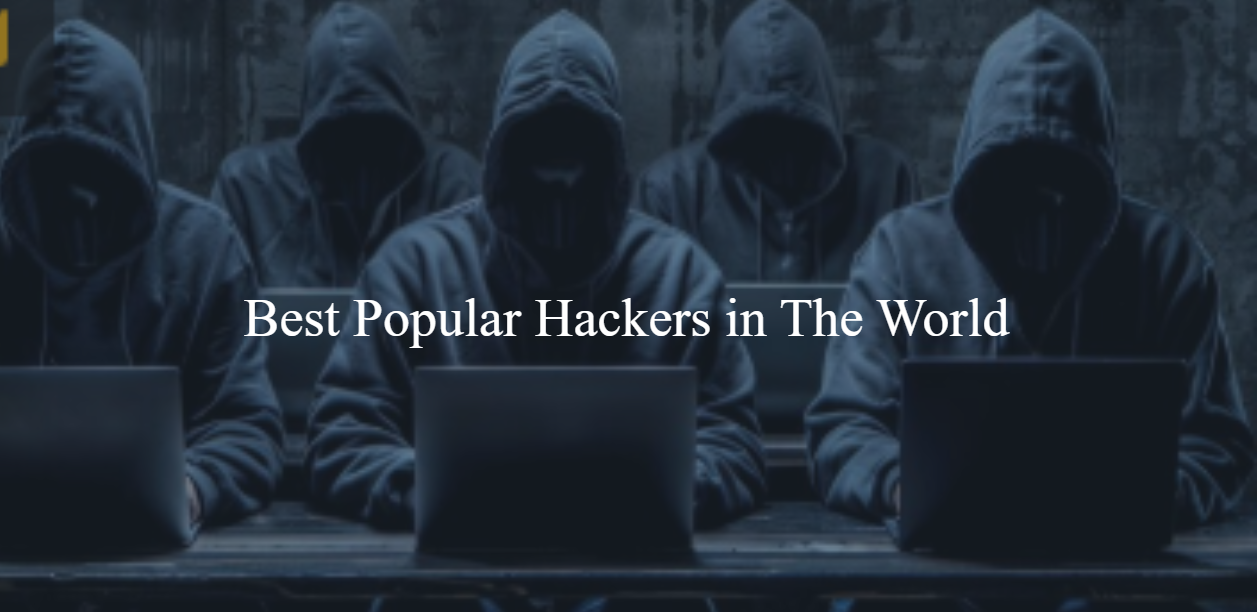
In today’s interconnected digital ecosystem, cybersecurity has become one of the most critical foundations of modern society. From financial systems and government infrastructure to healthcare networks and personal communication platforms, nearly every aspect of human activity now depends on secure digital systems.
Within this environment, the term “hacker” carries a complex and often misunderstood meaning. In its original sense, hacking refers to the deep exploration of systems—understanding how they work, identifying weaknesses, and pushing technological boundaries. However, over time, the term has expanded to include a wide spectrum of individuals, ranging from ethical security researchers (white-hat hackers) who strengthen digital defenses, to malicious actors who exploit vulnerabilities for personal or political gain, as well as hacktivists who use cyber techniques to advance ideological or social causes.
This article examines some of the most influential and highly skilled hackers in the world, often described in popular culture as the “best hackers.” These individuals were selected not for glorifying illegal activity, but for their technical expertise, historical significance, and measurable impact on the evolution of cybersecurity.
By studying their methods, motivations, and outcomes, we gain valuable insight into how digital systems are compromised—and more importantly, how they are improved. In many ways, the history of hacking is also the history of cybersecurity itself: a continuous cycle of attack, discovery, and defense that shapes the safety of the modern internet.
The truth is that “hacker” is not a single category. It includes ethical hackers (white hats), security researchers, hacktivists, and criminal hackers. The individuals below are widely considered among the most influential and skilled in the world of hacking and cybersecurity.
This guide focuses on impact, technical skill, and influence on global cybersecurity evolution.
1. Kevin Mitnick — The Social Engineering Master
Kevin Mitnick
Kevin Mitnick is often ranked as one of the best hackers in history due to his legendary ability in social engineering.
He did not rely heavily on complex code exploits—he exploited human psychology. His attacks showed that employees can be more vulnerable than systems.
After serving prison time, he became a respected security consultant.
🔑 Key impact:
- Popularized “social engineering” in cybersecurity
- Helped companies improve human-level security training
- Author of multiple cybersecurity books
🔗 https://en.wikipedia.org/wiki/Kevin_Mitnick
2. Tsutomu Shimomura — The Hacker Hunter
Tsutomu Shimomura
Shimomura is famous not for hacking illegally, but for helping track down Kevin Mitnick in one of the most famous cyber pursuits in history.
He used advanced tracking techniques to locate Mitnick’s signal emissions and network behavior.
🔑 Key impact:
- Helped law enforcement capture Mitnick
- Advanced digital forensics techniques
- Demonstrated how attackers can be traced
🔗 https://en.wikipedia.org/wiki/Tsutomu_Shimomura
3. Joanna Rutkowska — Operating System Security Expert
Joanna Rutkowska
Joanna Rutkowska is one of the most respected low-level security researchers in the world.
She is known for discovering stealth malware techniques that could hide inside operating systems (such as BIOS-level attacks).
🔑 Key impact:
- Developed “Blue Pill” virtualization rootkit concept
- Improved OS-level security awareness
- Influenced modern secure operating system design
🔗 https://en.wikipedia.org/wiki/Joanna_Rutkowska
4. Charlie Miller — Apple & Car Hacking Expert
Charlie Miller
Charlie Miller is a legendary ethical hacker known for finding critical vulnerabilities in Apple products and automotive systems.
He famously demonstrated how cars could be remotely hacked through connected systems.
🔑 Key impact:
- Exposed iOS security vulnerabilities
- Helped improve automotive cybersecurity
- Showed risks of connected smart vehicles
🔗 https://en.wikipedia.org/wiki/Charlie_Miller_(security_researcher)
5. Barnaby Jack — ATM & Medical Device Hacker
Barnaby Jack
Barnaby Jack became famous for demonstrating how ATMs could be forced to “spit out cash” remotely—known as “jackpotting.”
He also revealed vulnerabilities in medical devices like insulin pumps.
🔑 Key impact:
- Exposed ATM security flaws globally
- Raised awareness about medical device hacking risks
- Influenced hardware security design
🔗 https://en.wikipedia.org/wiki/Barnaby_Jack
6. Marcus Hutchins — The WannaCry Stopper
Marcus Hutchins
Marcus Hutchins gained global recognition in 2017 when he accidentally discovered a “kill switch” that stopped the WannaCry ransomware attack.
That malware had affected hundreds of thousands of systems worldwide.
🔑 Key impact:
- Helped stop global ransomware outbreak
- Highlighted importance of reverse engineering malware
- Became a symbol of accidental heroism in cybersecurity
🔗 https://en.wikipedia.org/wiki/Marcus_Hutchins
7. Mudge (Peiter Zatko) — Hacker Turned Pentagon Advisor
Peiter Zatko
Known as “Mudge,” he was part of the famous hacker collective L0pht in the 1990s, which warned the U.S. government about internet vulnerabilities.
He later worked for DARPA and Twitter.
🔑 Key impact:
- Helped shape U.S. cybersecurity policy
- Founded early vulnerability research culture
- Transitioned from hacker culture to national defense advisory roles
🔗 https://en.wikipedia.org/wiki/Peiter_Zatko
8. George Hotz — First iPhone Jailbreaker
George Hotz
George Hotz, also known as “geohot,” became famous for being the first person to unlock the iPhone and later hack the PlayStation 3.
He later founded AI and autonomous driving startups.
🔑 Key impact:
- Advanced mobile jailbreaking culture
- Exposed hardware-level vulnerabilities in gaming consoles
- Transitioned into AI innovation
🔗 https://en.wikipedia.org/wiki/George_Hotz
9. Tavis Ormandy — Google’s Security Guardian
Tavis Ormandy
Tavis Ormandy works in Google’s Project Zero team, one of the most elite vulnerability research groups in the world.
He is known for finding critical vulnerabilities in major software within days of analysis.
🔑 Key impact:
- Discovers zero-day vulnerabilities in widely used software
- Strengthens global software security ecosystem
- Advocates responsible disclosure practices
🔗 https://en.wikipedia.org/wiki/Google_Project_Zero
10. Anonymous Collective — Global Digital Force
Anonymous
Anonymous is not a single hacker but a global decentralized group known for cyber activism.
They became famous for targeting governments, corporations, and organizations accused of censorship or injustice.
🔑 Key impact:
- Popularized modern hacktivism
- Influenced digital protest movements worldwide
- Demonstrated power of decentralized cyber groups
🔗 https://en.wikipedia.org/wiki/Anonymous_(hacker_group)
Key Lessons From the World’s Best Hackers
The best hackers in the world are not defined only by skill—but by their impact on technology, security, and society.
Here are the most important lessons from their stories:
1. Humans are the weakest link
Even the most secure systems fail when users are tricked.
2. Hardware is now as vulnerable as software
From cars to ATMs to medical devices, everything is hackable.
3. Ethical hacking is essential
Many top hackers eventually moved into security research to protect systems.
4. Cybersecurity is constantly evolving
Every attack leads to stronger defenses.
Final Conclusion
The idea of the “best hacker” depends on perspective. Some are celebrated for exposing weaknesses, others for stopping cyberattacks, and some remain controversial due to illegal activities.
What is clear is this:
Modern digital life—banking, communication, transportation, and even warfare—is shaped by the actions of hackers.
Understanding their stories is not about admiration of crime, but about building a safer, smarter, and more secure digital world.